The problem
Federal employees transitioning to the private sector face a structural format mismatch: federal resumes run 5–10 pages with required disclosures and KSA narratives, while private-sector recruiters skim for 2 pages. Manual condensation is time-consuming, and most resume tools don't understand federal job series, GS grades, or USAJobs conventions.
My role
- Identified the federal-to-private transition gap from workforce trends and stakeholder conversations during EEOC consulting
- Defined privacy-by-architecture as the central product principle: no accounts, no database, no content cookies — the only credible posture for security-cleared users
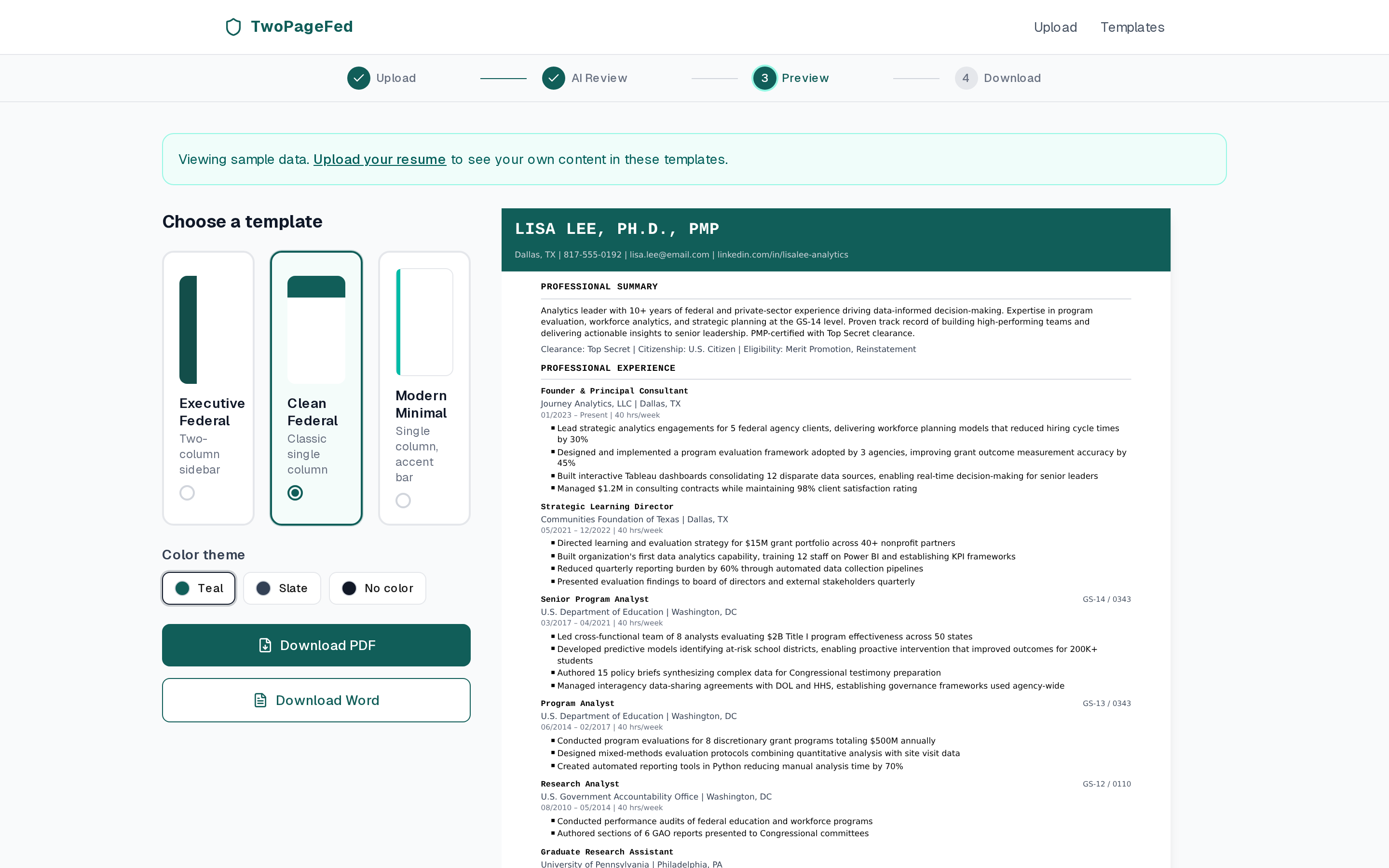
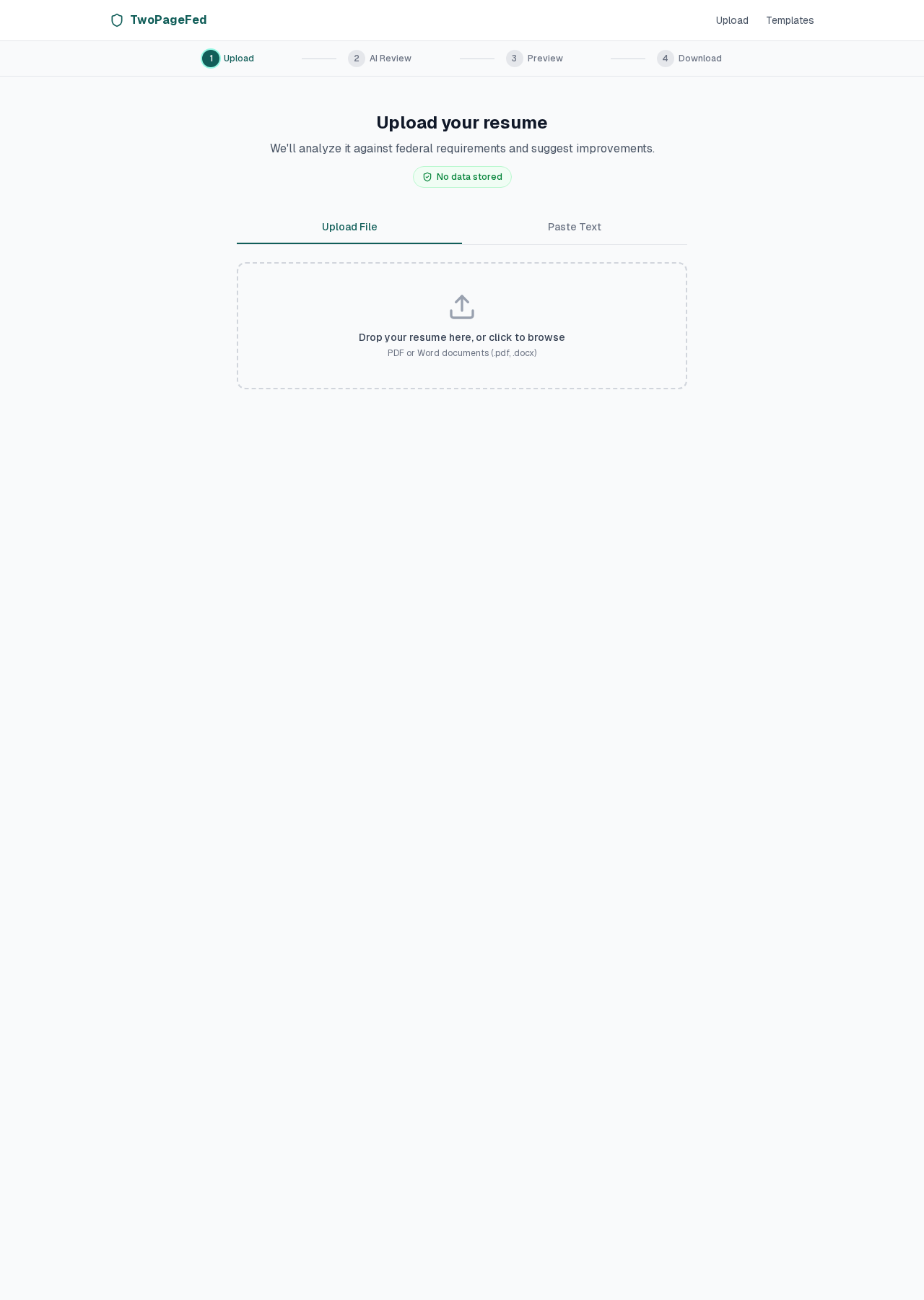
- Designed the three-step user flow: upload → AI review → polished download
- Built the federal requirements checklist and readiness score logic against USAJobs and OPM guidance
- Set pricing model: free AI review, $24.99 one-time at download — removes adoption friction and only monetizes successful condensation
Process & methods
- User research: federal employees in transition, including security-cleared roles where data retention is a deal-breaker
- Competitive teardown: Resume.io, Zety, USAJobs-specific tools — none combined federal literacy with privacy posture
- Architecture: ephemeral AI session, browser-side document generation, no persistent store
- Template system: three professional templates optimized for ATS parsing in the private sector
Outcomes
- Live at 2pagefed.com with full upload-to-download flow
- Privacy-by-architecture positioning differentiates from generic resume tools and addresses the cleared-workforce segment specifically
- One-time pricing model avoids subscription fatigue common in the resume category
What I'd do differently
I'd add a redacted before/after gallery to the homepage. Federal users are skeptical of generic AI claims, and showing real condensation examples (with permission) builds trust faster than feature copy.